
Every architectural project has unique requirements, and some demand a particularly careful approach to door selection and installation. In commercial and institutional buildings, fire-rated doors can be an essential part of the project’s fire and life-safety strategy.
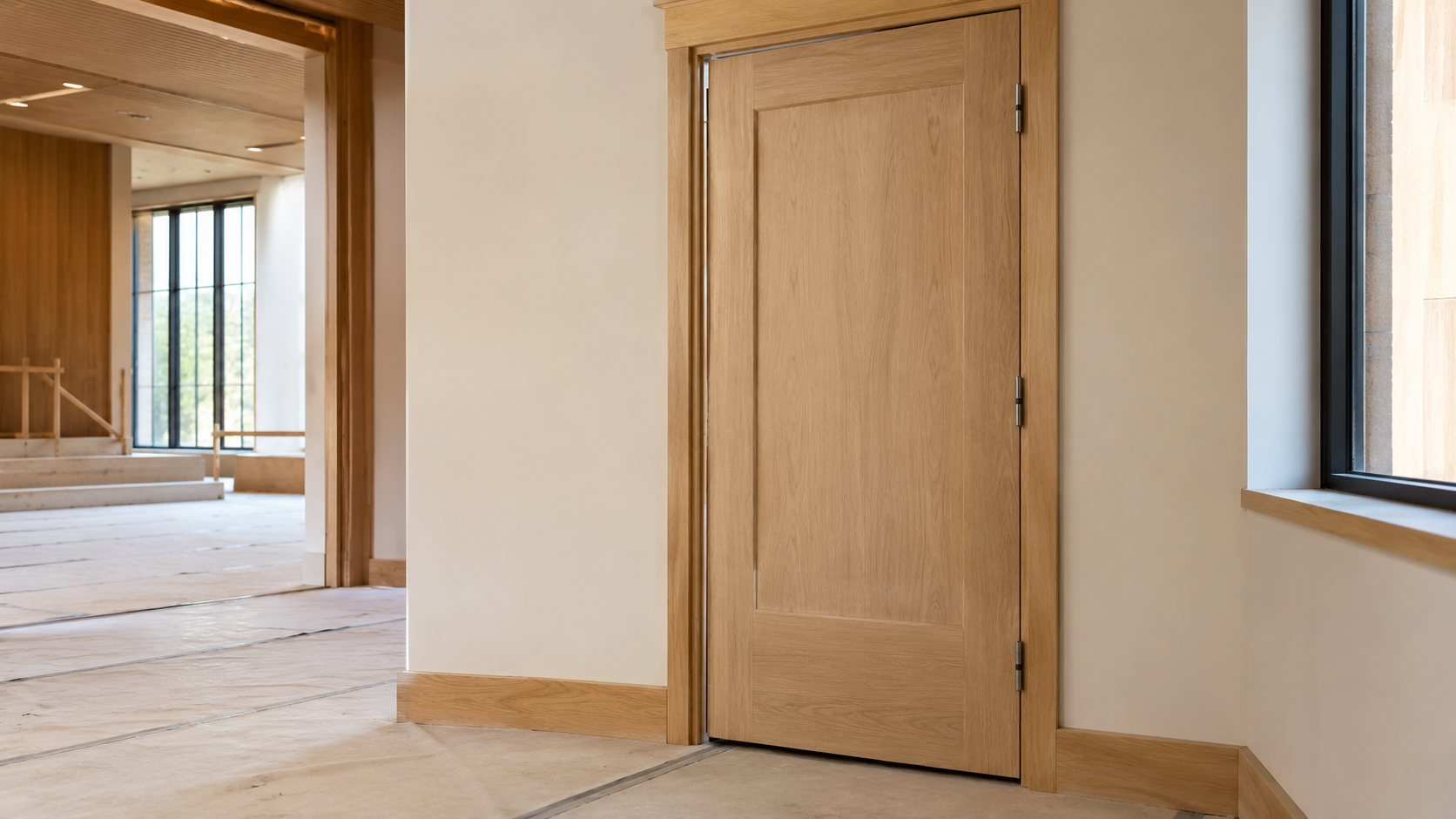
In a recent project featured by Equinox Jambs, the team showcased a synagogue installation featuring fire-rated white oak doors. The project highlights the importance of combining architectural appearance, specified fire protection requirements, and a practical installation process.
From natural white oak finishes to conventional hinges and installation planning, this project demonstrates how door specifications can be tailored to the needs of a particular building.
White oak is valued for its natural grain, distinctive appearance, and versatility in architectural interiors. It can complement traditional, contemporary, and transitional designs, making it a suitable finish choice for a variety of commercial and institutional spaces.
In this synagogue project, the doors are made with fire-rated specifications while retaining the natural character of white oak.
The doors are shown before final installation and finishing. The project team plans to sand and stain the wood to achieve the desired appearance.
An important distinction: A door’s wood species or finish does not determine its fire rating. The complete door assembly must meet the applicable fire-rating requirements and be installed according to its approved specifications.
Buildings such as synagogues, schools, offices, and other public or institutional facilities may require fire-rated doors at designated openings.
These doors are selected according to the building’s design, applicable codes, and the requirements for each opening. Depending on the assembly, components such as the door, frame or jamb, hinges, seals, and hardware may need to meet specific requirements.
For a successful project, architects, contractors, and installers should confirm the required rating and approved components before installation begins.
Equinox Jambs’ featured project demonstrates the use of fire-rated doors in a specialized institutional setting. The precise rating and approved assembly specifications should always be confirmed for the individual project.
Yes, fire-rated doors can use conventional hinges when those hinges are permitted by the approved door assembly and project specifications.
In the featured video, the doors use regular hinges rather than concealed hinges. This illustrates an important point for architects and builders: modern architectural door projects do not always require hidden hardware.
The right hinge selection depends on the door’s design, weight, hardware requirements, and fire-rating documentation. Using concealed or conventional hinges should be a specification decision rather than simply an aesthetic preference.
The reel also highlights a useful aspect of project planning: door jambs can be coordinated and installed before the doors and handles are ready, where the selected system and project sequence allow it.
This can help contractors organize different stages of construction more efficiently.
A well-planned workflow may include:
The exact sequence depends on the door and jamb system being used. Fire-rated assemblies must not be improvised or altered outside their approved installation requirements.
Before the doors are installed, the white oak surfaces can be prepared for the intended finish, provided the finishing process is permitted by the door manufacturer’s instructions.
Sanding and staining can help bring out the wood grain and coordinate the doors with the surrounding interior materials.
For commercial and institutional projects, finish selection should account for appearance, maintenance, durability, and any restrictions specified for the fire-rated door.
The goal is to achieve a refined finish without compromising the door’s required performance.
Every commercial building has different architectural and functional requirements. Some projects call for concealed hinges and minimal-reveal details, while others require conventional hardware, specific wood finishes, or fire-rated door assemblies.
The synagogue project demonstrates the importance of considering those requirements early, before products are ordered and installation begins.
Equinox Jambs provides architectural door jamb systems for modern residential and commercial applications. For projects involving fire-rated doors, the required jamb configuration and compatibility should be confirmed directly with the project team and relevant manufacturers.
Fire-rated wood doors are doors tested and approved for a specified period of fire resistance as part of an appropriate door assembly. Their performance depends on the approved design, compatible components, and correct installation.
Yes. White oak doors can be manufactured as fire-rated products when they are part of a tested and approved design. The wood species alone does not establish the fire rating.
Yes, when conventional hinges are permitted by the approved assembly and project specifications. All required hardware must be compatible with the door’s fire-rating requirements.
In some projects, yes. The sequence depends on the selected jamb system, door specifications, and construction schedule. Fire-rated openings must follow the applicable approved installation instructions.
Contractors should confirm the required rating, approved door and frame components, hinge and hardware compatibility, required seals, labeling, clearances, and installation instructions. Local code requirements should also be verified.
The synagogue project featured by Equinox Jambs demonstrates how specialized commercial door projects bring together appearance, hardware selection, fire-rating requirements, and installation planning.
Fire-rated white oak doors can provide a natural, refined finish while serving an important safety function when specified and installed as part of an approved assembly.
For architects, builders, and contractors, the key is to coordinate every component early and ensure that the finished installation meets the project’s requirements.
Planning a commercial or institutional door project? Explore Equinox Jambs’ architectural door jamb systems and contact the team to discuss the appropriate configuration for your project.